Flame retardant ABS particles are a kind of plastic material with flame retardant properties, mainly used in electronic appliances, auto parts, building materials and other fields. Compared with ordinary ABS particles, flame retardant ABS particles have certain differences in the production process.
First of all, flame retardant ABS particles are different in the choice of raw materials. Ordinary ABS particles are mainly composed of acrylonitrile, butadiene and styrene, while flame retardant ABS particles need to add flame retardants. The choice of flame retardant has a great influence on the performance of the product, and the commonly used flame retardants are bromine, phosphorus, nitrogen and so on. Different flame retardants have different flame retardant effects and scope of application, so it is necessary to select suitable flame retardants according to product requirements in the production process.
Secondly, the flame retardant ABS particles need to be fully dispersed and mixed in the production process. In order to ensure the uniform distribution of flame retardant in the matrix, high-speed stirring, twin-screw extrusion and other processes are usually used. These processes can make the flame retardant and the matrix fully integrated to improve the flame retardant effect.
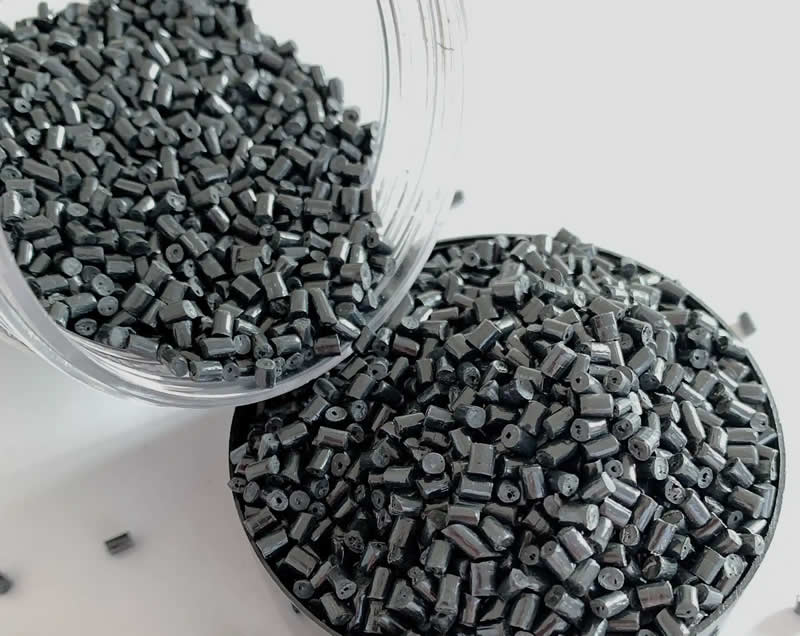
Furthermore, the flame retardant ABS particles need to pay attention to control the temperature during the molding process. Due to the addition of the flame retardant, the melting temperature and thermal stability of the flame retardant ABS particles may change. Therefore, in the molding process, it is necessary to adjust the temperature parameters according to the actual situation to ensure the molding quality and performance of the product.
In addition, flame retardant ABS particles need to be strictly controlled in the production process. In addition to the control of raw materials and process parameters, it is also necessary to test the flame retardant performance of the finished product to ensure that the product achieves the expected flame retardant effect. At the same time, it is also necessary to test the mechanical properties and thermal properties of the product to ensure the comprehensive performance of the product.
In short, compared with ordinary ABS particles, the production process of flame retardant ABS particles mainly lies in the selection of flame retardant, dispersion and mixing, molding temperature control and quality control. Through reasonable process design and strict quality control, flame retardant ABS particles with good flame retardant properties can be produced to meet the application needs of different fields.

















 WeChat